
DOORS
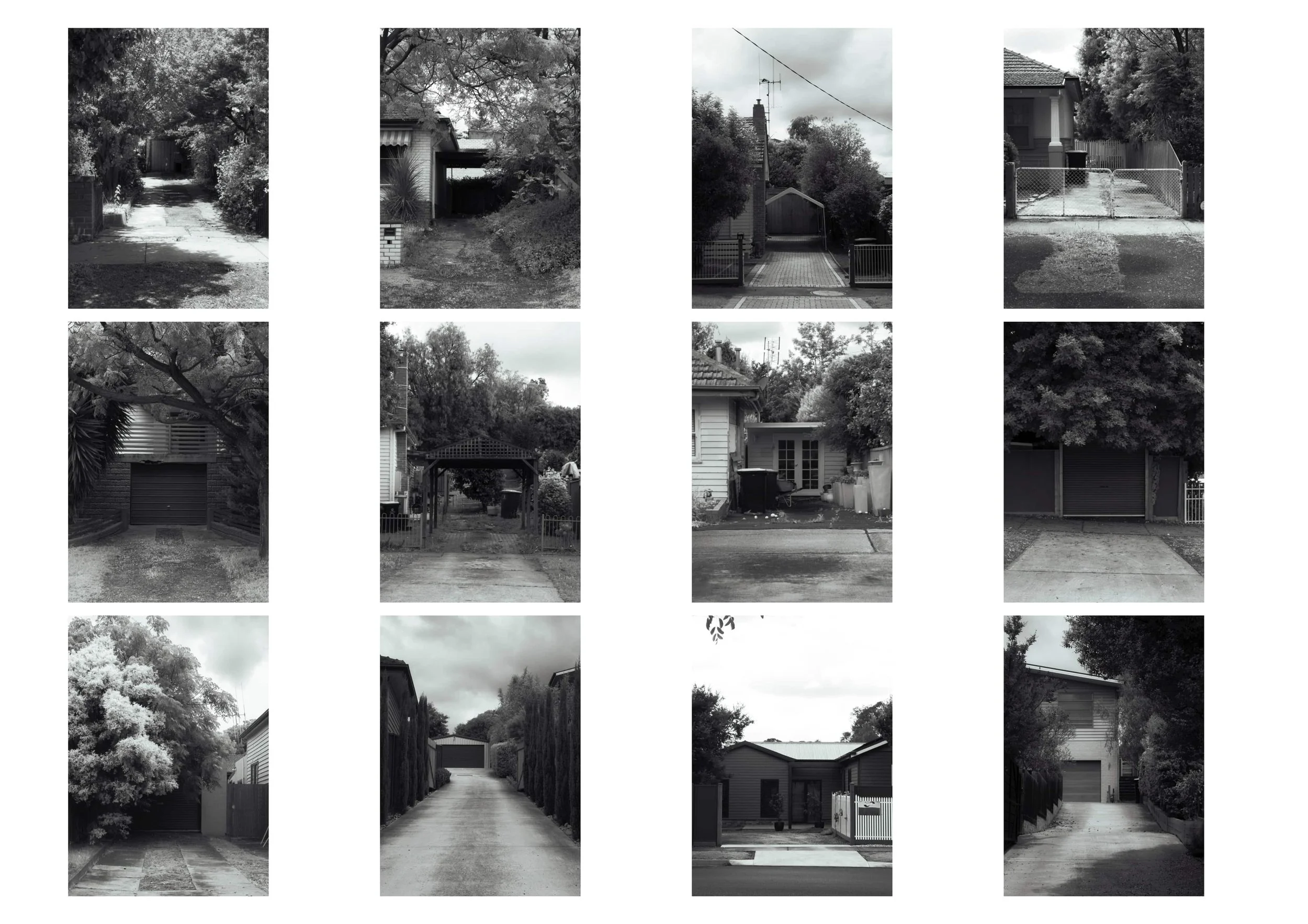
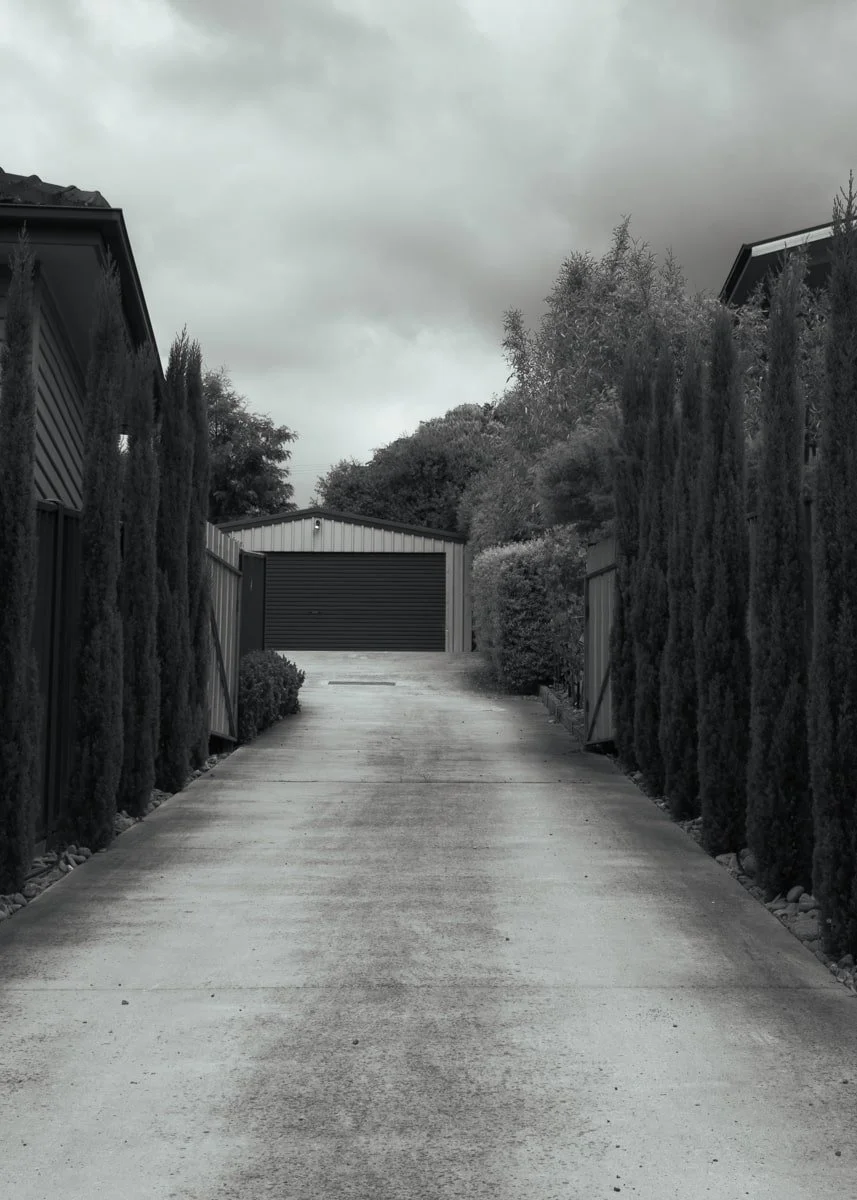
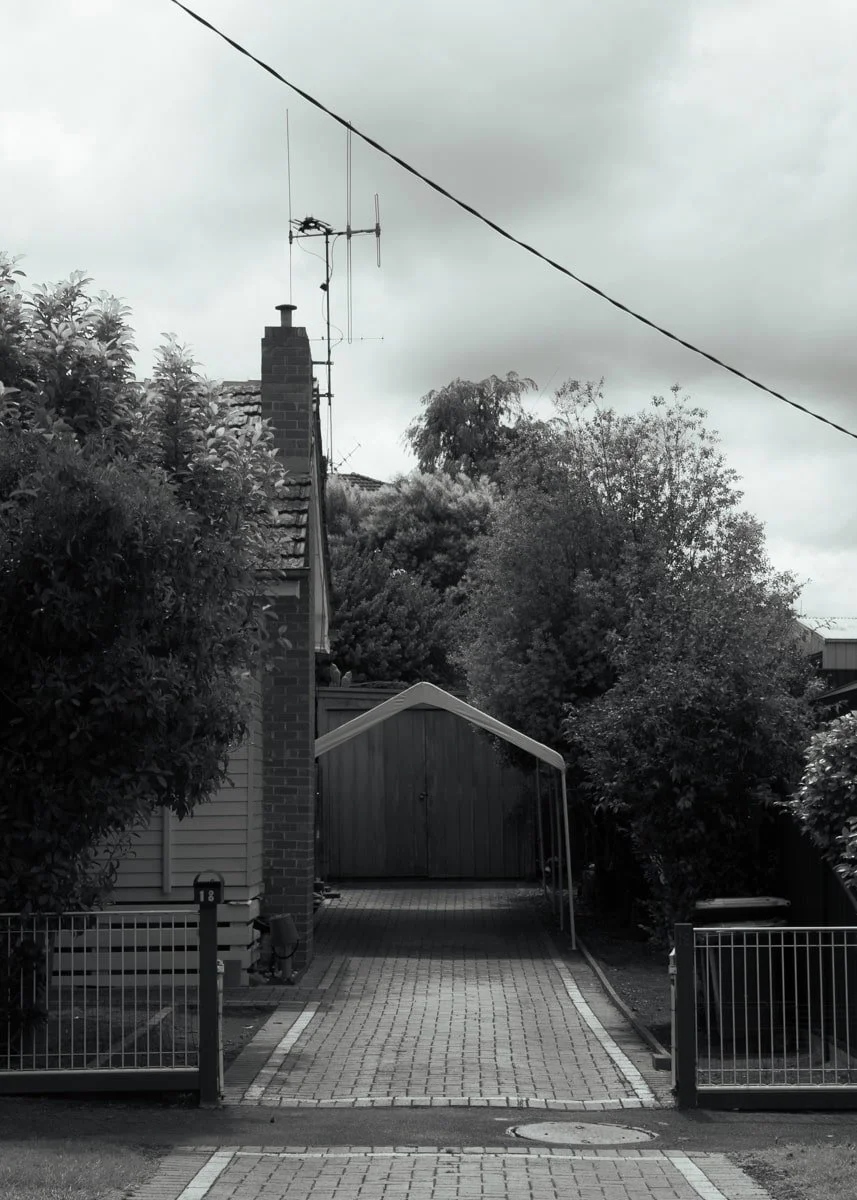
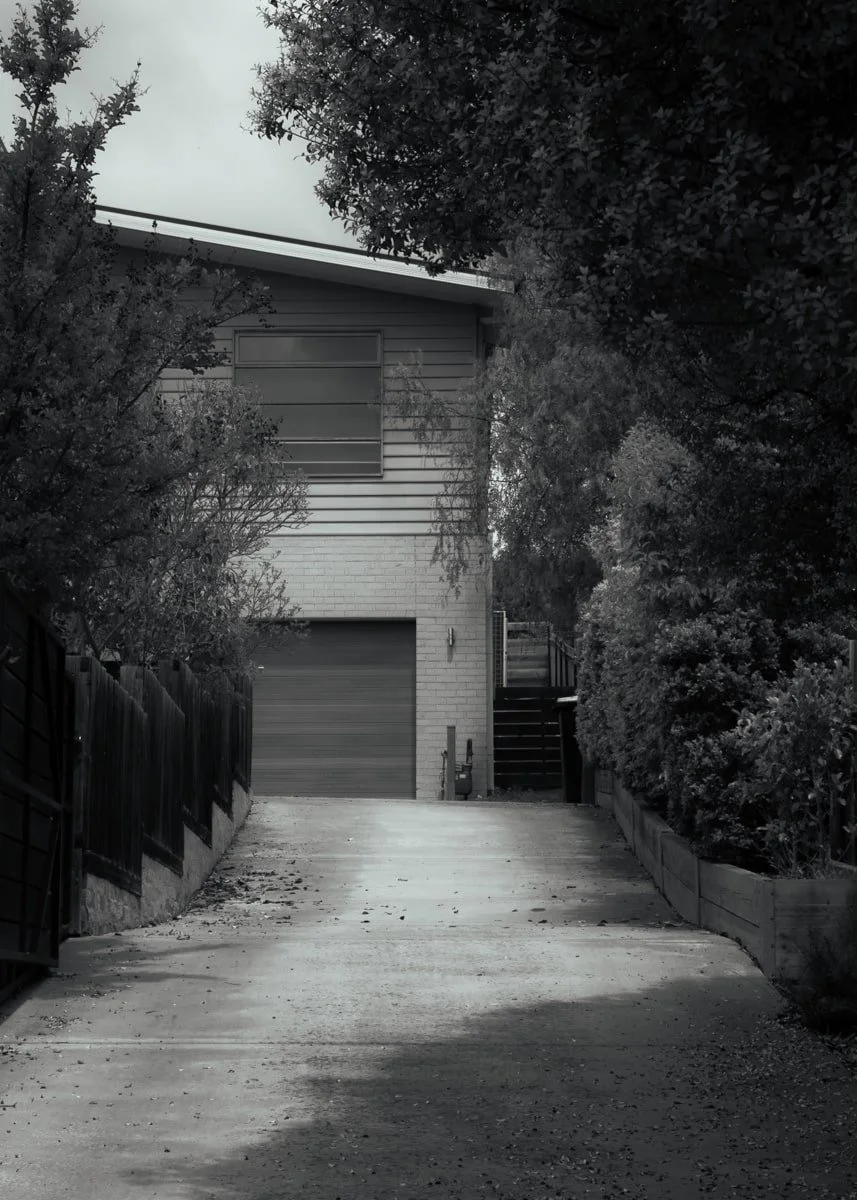
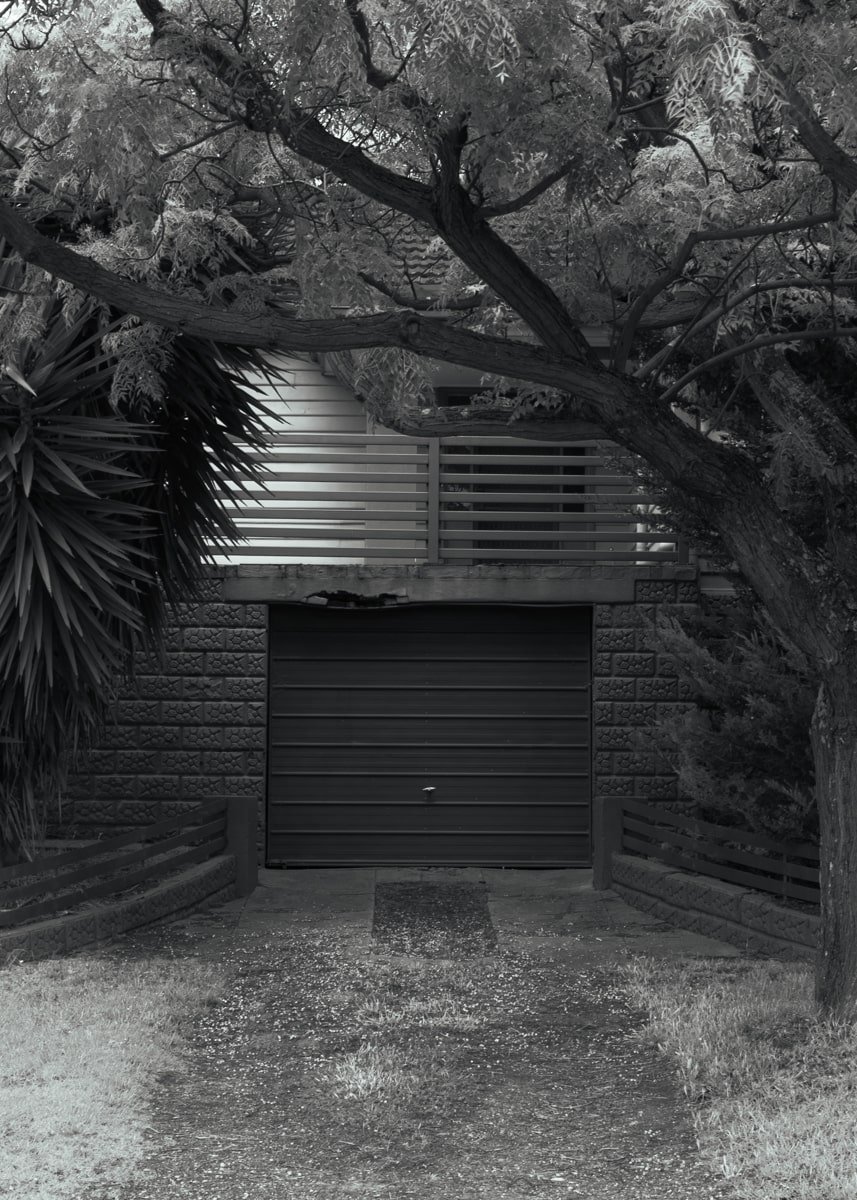
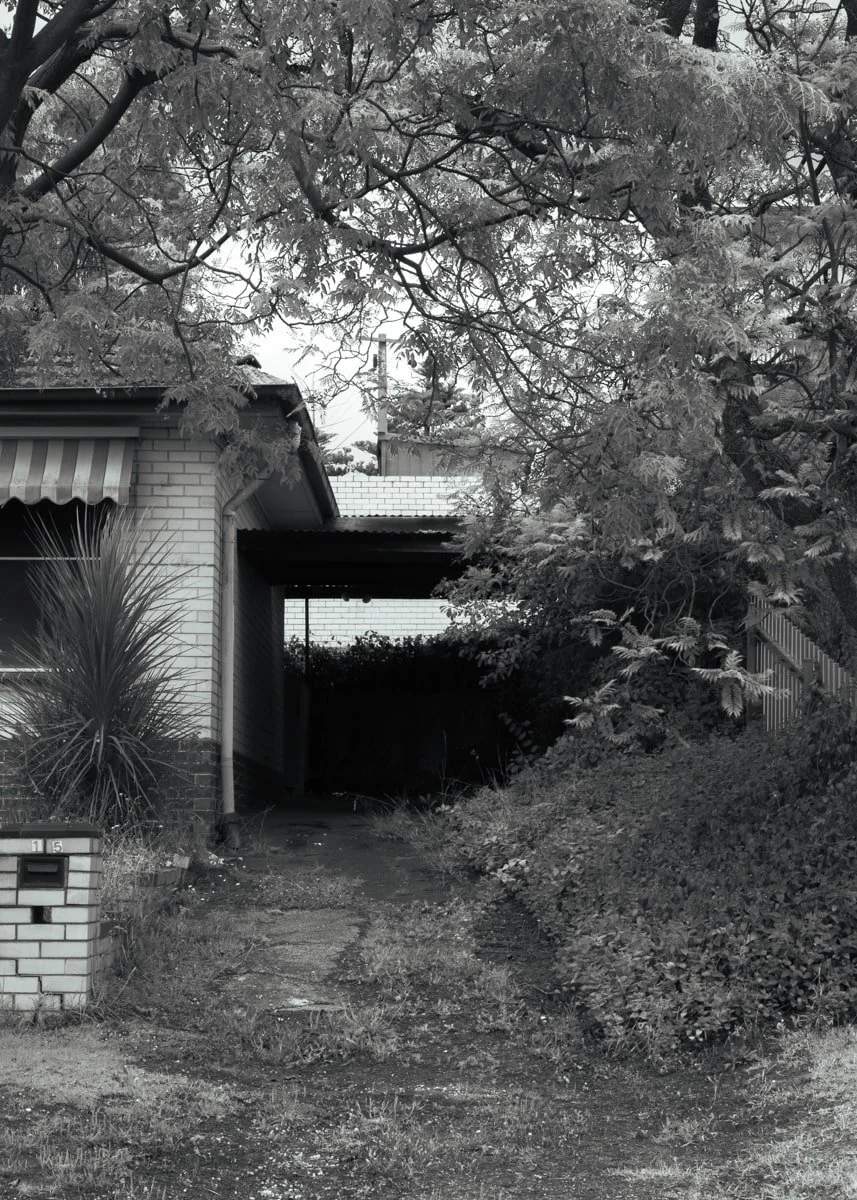
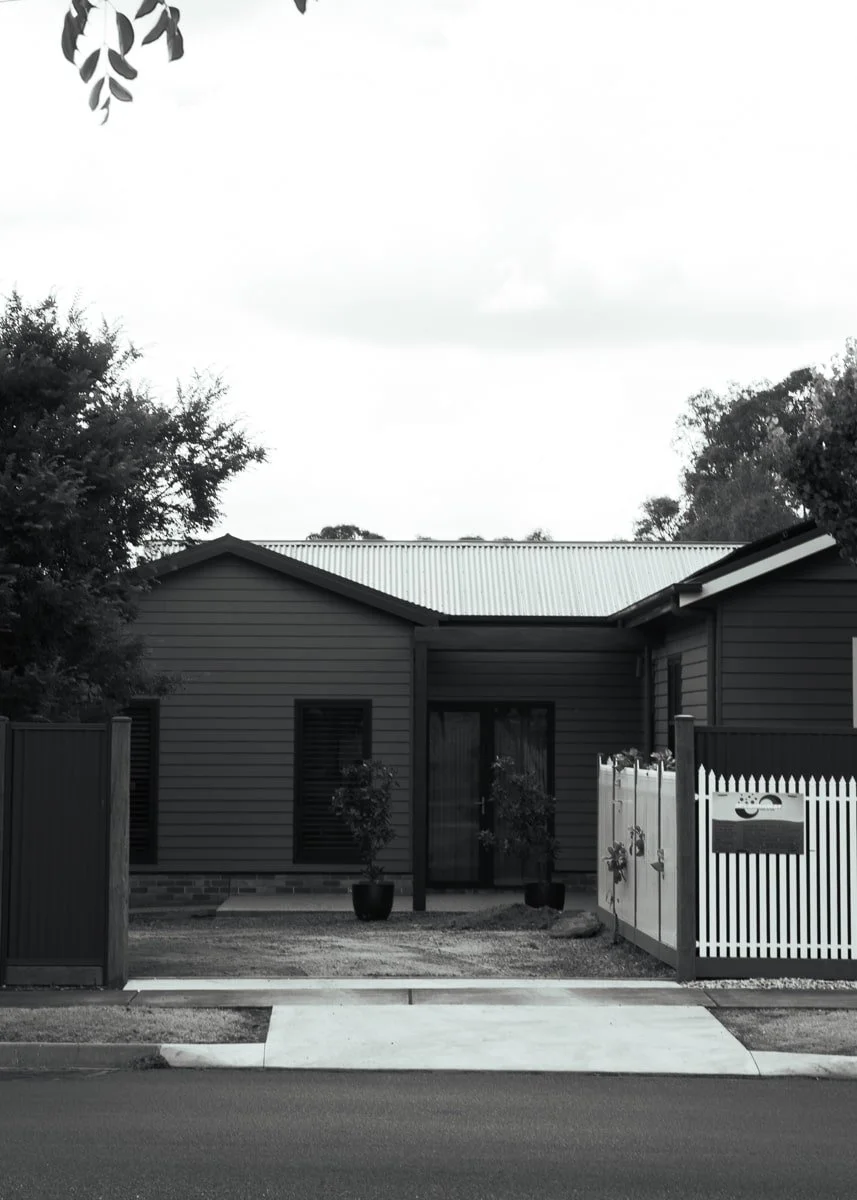
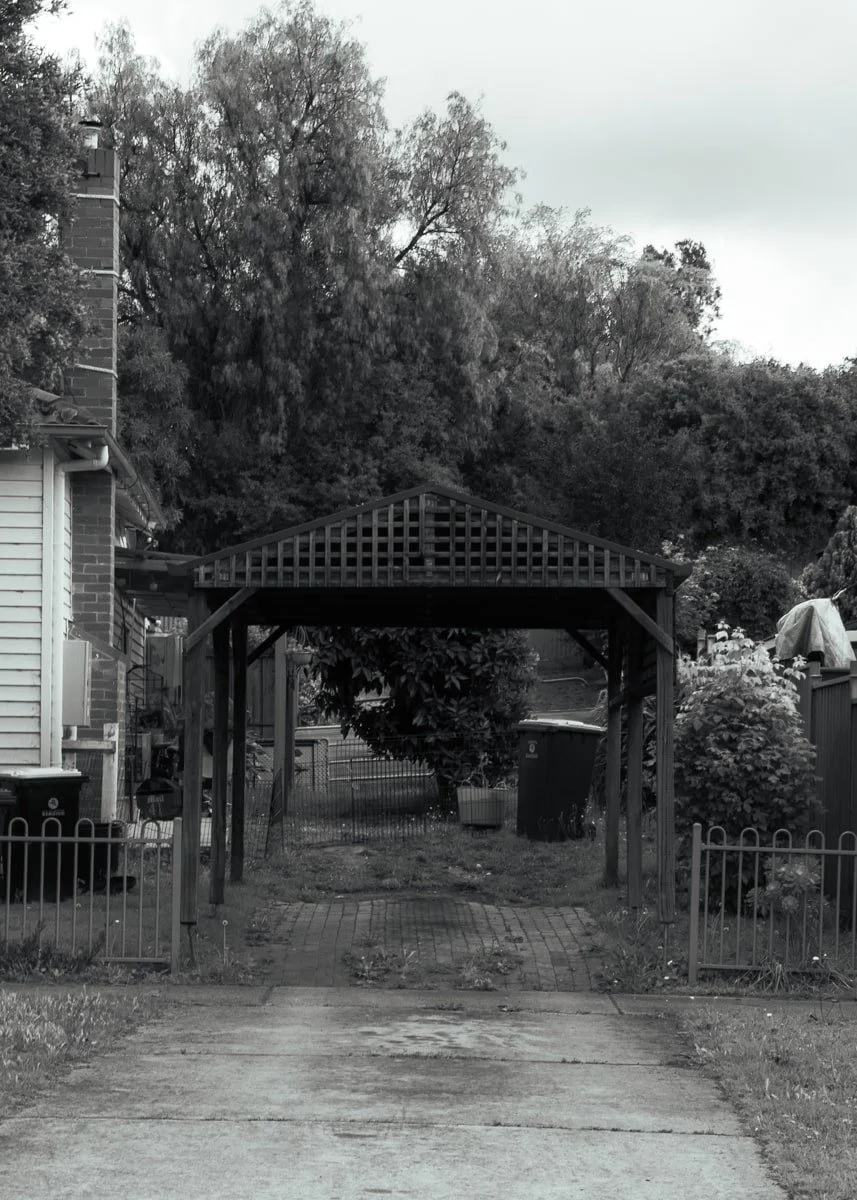
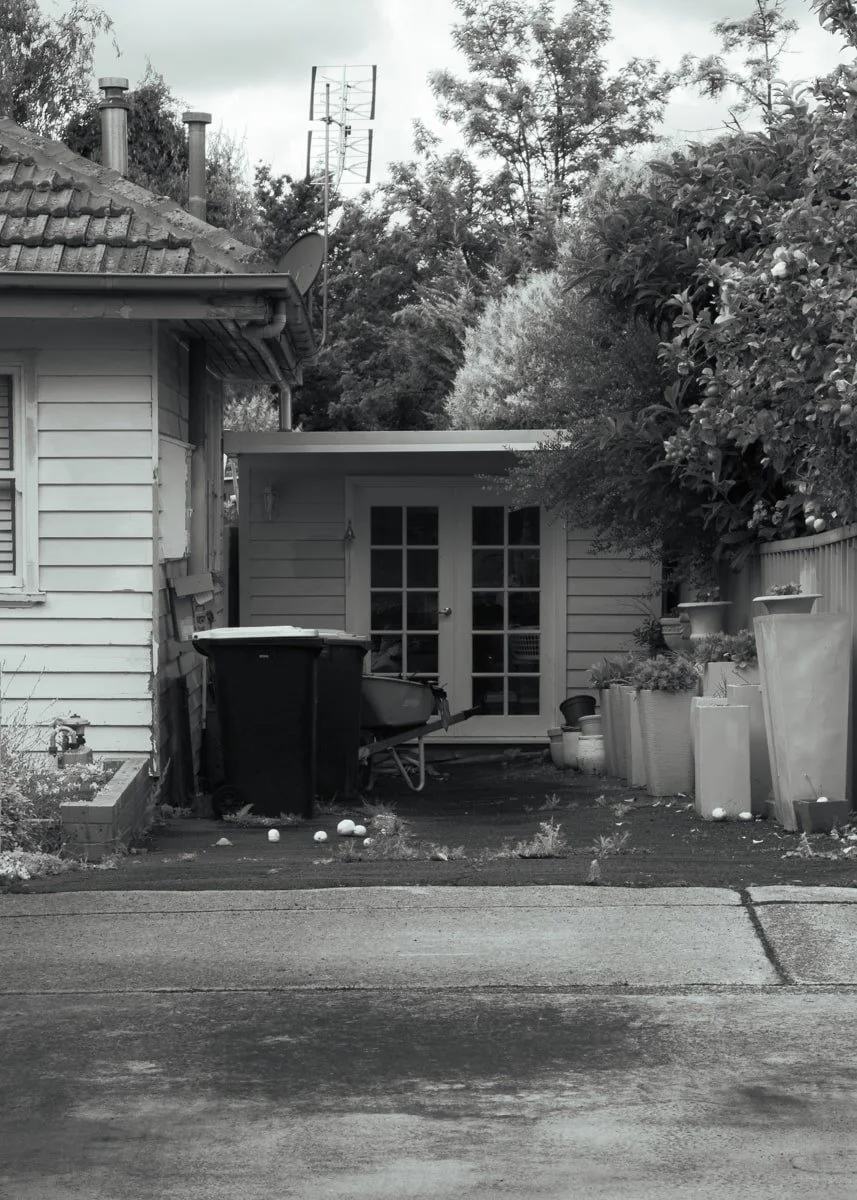
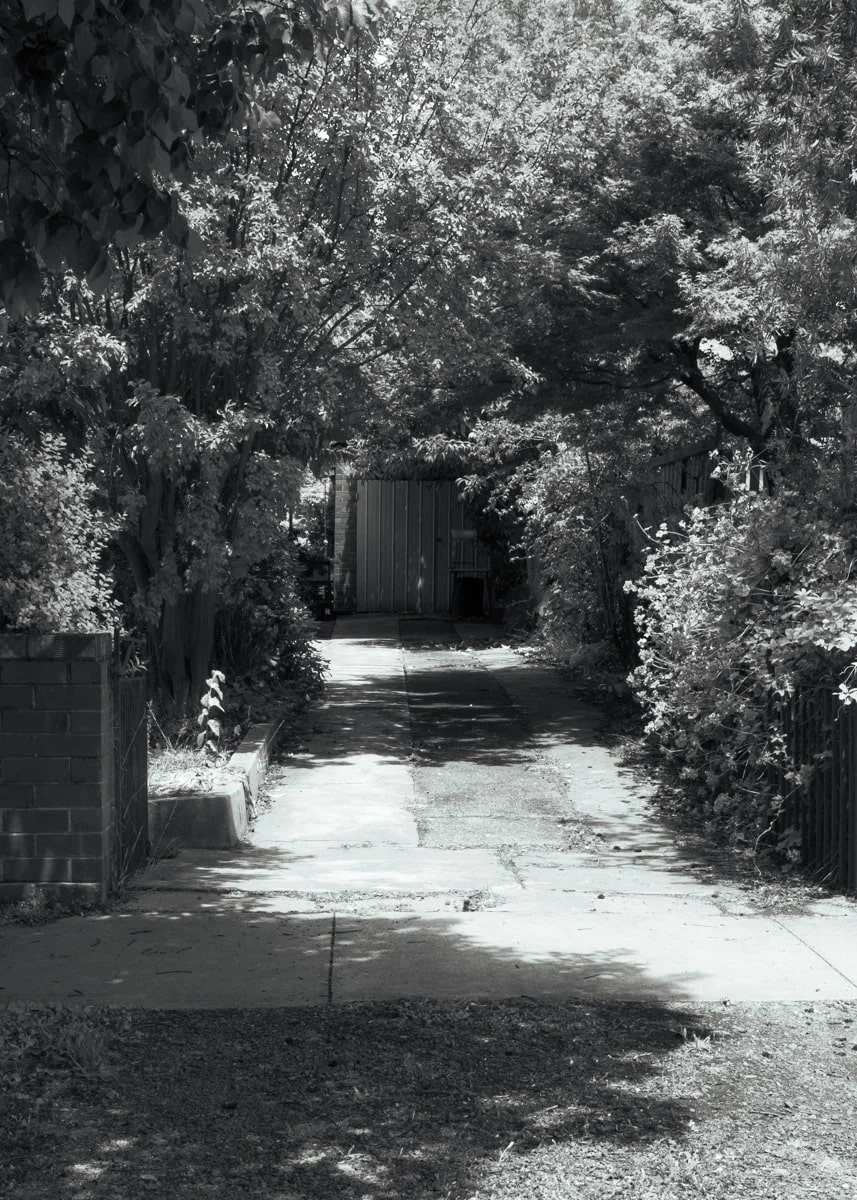
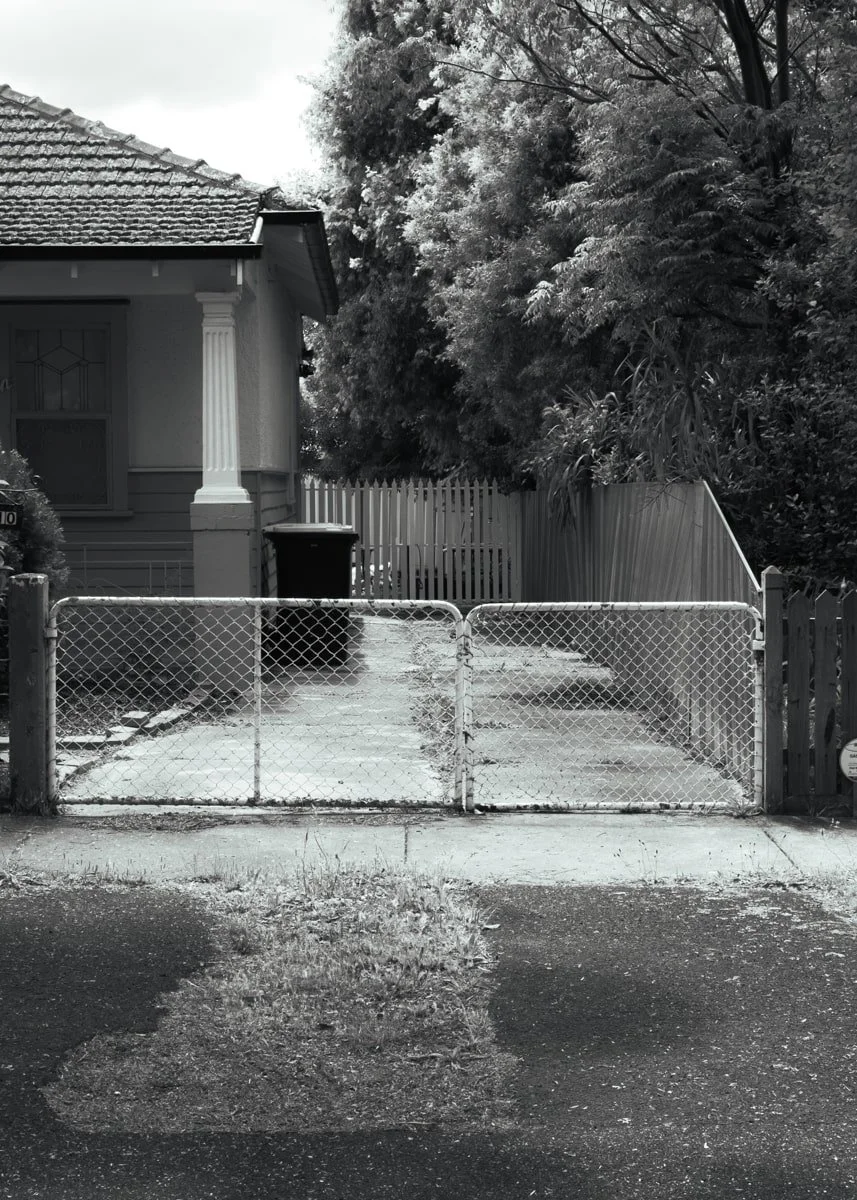
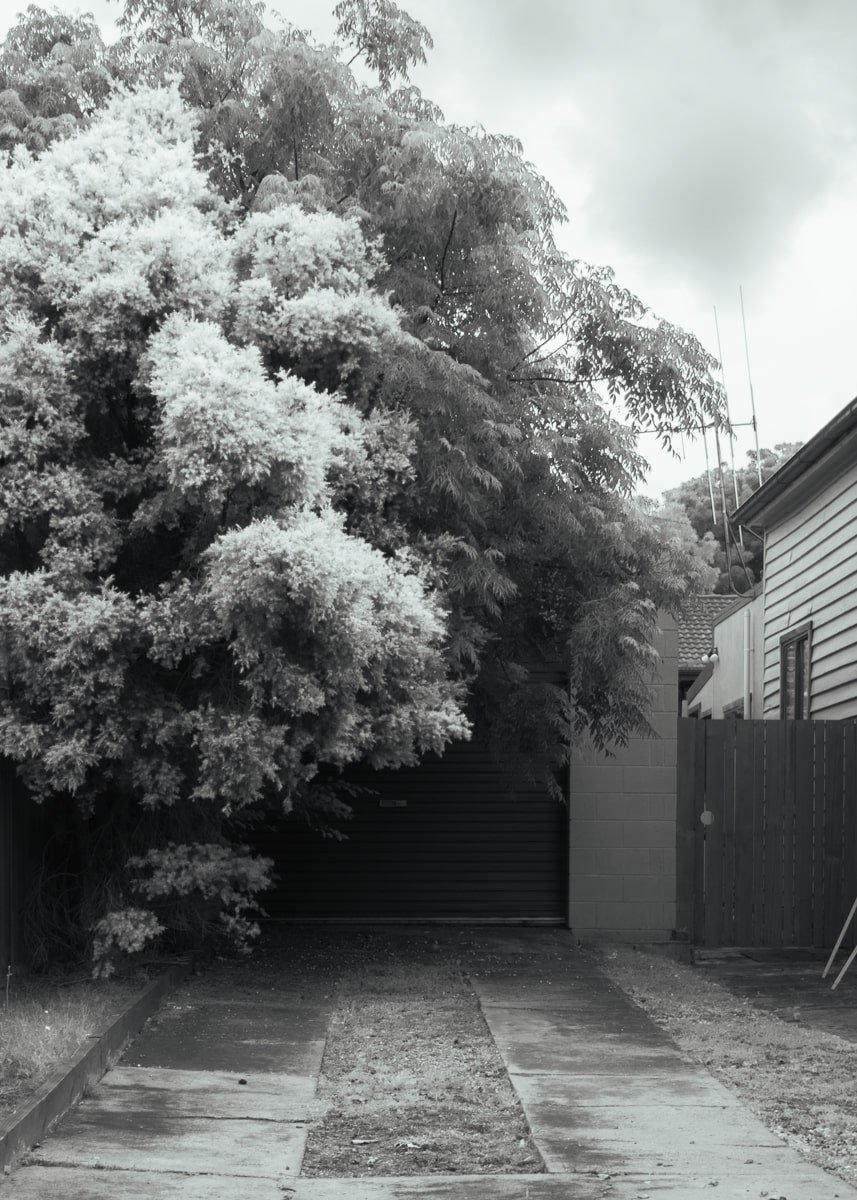
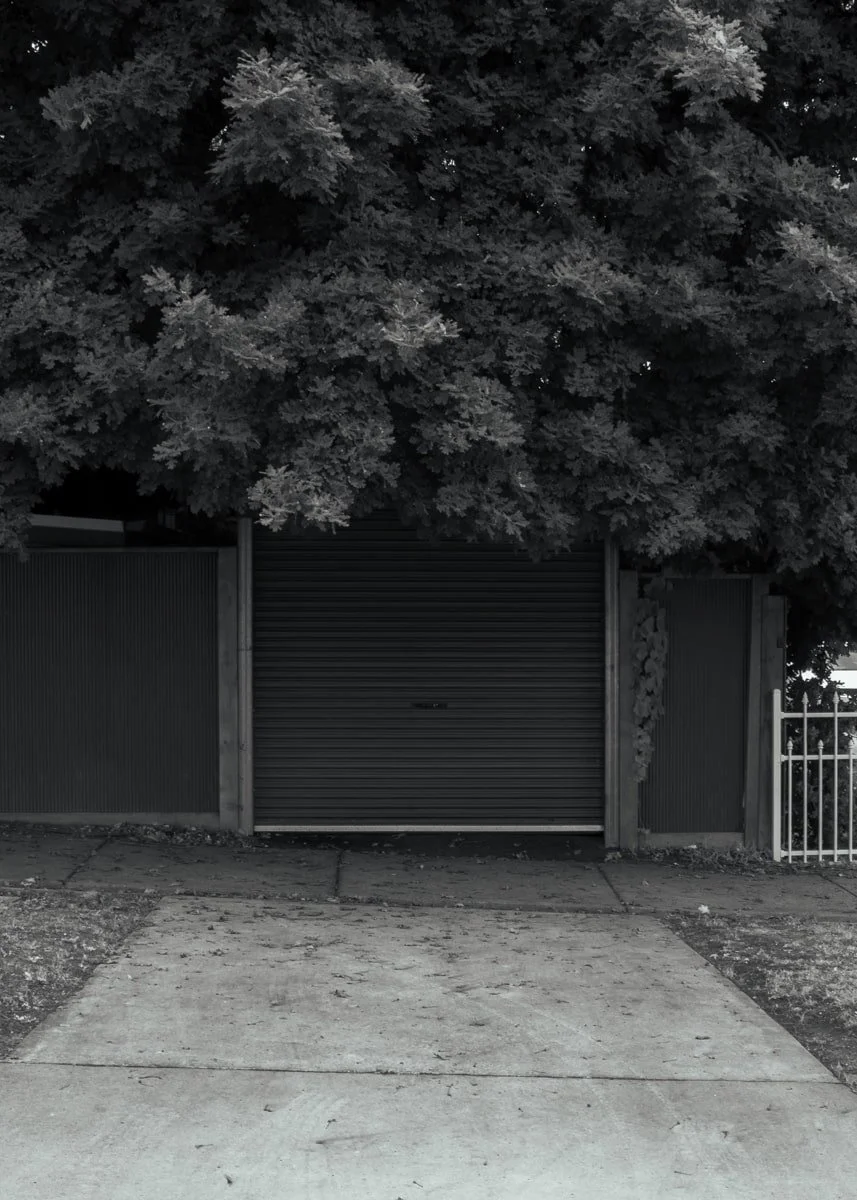
The collection of work titled Doors, revolves around the adaption of the movement of new topographics, a term coined by William Jenkins in 1975, which can be described as using one’s camera lens to capture ‘the often overlooked and sometimes starkly unattractive transformation of the American landscape by human activities [rather than your typical] picturesque, natural landscapes that had dominated the photography world for decades.’ (Space 2023) Incorporating similar aspects into this collection by exploring the growth or overgrowth of foliage and its symbolism of precision and cleanliness or lack thereof, and its relation to property development.
With many photographers associated with this movement including Robert Adams, Lewis Baltz, Nicholas Nixon, and Bernd and Hiller Becher, the primary influence throughout this photographic response was the work of Bernd and Hiller Becher – specifically the collection ‘Fördertürme, Belgien, Frankreich (Winding Towers, Belgium, France)’. Intrigued by the striking similarities between each photograph, my initial interpretations of it was as an evolution of the same structure, as resemblances can be seen with the archways, diagonal supports, and elevator shaft through the middle. Discussions between the individual images would then go onto developing my ideas towards a response to this piece, or more so the overall idea of new topographics. Linking back to its focus on the ‘man-altered landscape’ and its revelations on the ‘intersection of humanity and nature’ (Space 2023), the idea came about using a similar shooting style to the Becher’s, and comparing the architectural evolution in Bendigo, in relation to property development and in recent years urban residents making the move to regional areas.
Focusing solely on the driveway aspect of suburban housing, it captures a unique element in each, demonstrating a trend from 1910s to 30s Californian Bungalow style, to 1940s Post-War architecture, and elements of contemporary architecture – whether that be an extension or renovation of a pre-existing building or entirely new building in its place. Streets lined with various of these styles, the collection revolves around these changes – from the driveway, to fencing, and even variations in the physical garage or carport roofing, the most subtle of changes comments on ideas of expansionism from the quaint, historical facade, into an age of modernity; and escapism from the hustle and bustle of city life, moving to a slower pace in regional areas.
Through the use of almost consistent framing, a similar black and white edit to capture the collection of images, and foliage surrounding said subject matter - the aim of this collection was to define the features of architectural changes through snippets previewed against the garage and carports. Expanding on ideas of liveability or non-livability – through foliage engulfing the space respectively, it ponders the question of economic changes, maintenance of the area, and age of properties in comparison to contemporary developments. The ethical considerations linking back to new topographics and this collection as a whole, would be to ensure the privacy of the residents as taking photos into their property – could be seen as intrusive, as well as understanding the concept of the movement and reflecting its ideas of capturing unremarkable scenes – developed through the individual ‘doors’ (driveways) of different people’s homes, understanding the transformations both the people and the housing has gone through for generations.